It happens at almost every family gathering. An aunt or a neighbor casually asks, “He isn’t talking yet? My older son was reciting full poems by this age.” If you are a parent sitting there with a two-year-old who prefers pointing over speaking, that innocent question can feel heavy. It is completely normal to worry. We see this exact worry on the faces of parents who walk into Therapy Genius every single week. You are not alone, and your child has their own specific timeline.
But how do you know if it is just a phase or if you are looking at actual speech delay signs? It can be incredibly confusing to navigate the advice of well-meaning relatives alongside your own gut feelings. Let’s look closely at what is typical, what you can do at home, and when you should look for speech therapy for children in Hyderabad.
The difference between a late talker and a speech delay
Many parents hear stories about a cousin or a friend’s child who didn’t say a word until they were three and then suddenly started speaking in full sentences. While late talkers do exist, relying entirely on these stories can sometimes delay getting help when a child actually needs it.
A late talker is typically a child who understands almost everything you say. They use plenty of gestures, make eye contact, and find ways to get their message across, but they just have a smaller spoken vocabulary. A true speech or language delay looks a bit different. It means the child might struggle not just with talking, but also with understanding directions, engaging socially, or imitating basic sounds.
Early speech delay signs by age
Knowing what to look for at different stages helps you make informed decisions. Here are some everyday guidelines we share with families.
By 12 to 15 months
Around their first birthday, babies are usually babbling with different sounds. They might say simple things like “ma” or “pa”. They should also be responding to their name when you call them. If your baby is unusually quiet, does not use gestures like pointing at a toy or waving bye-bye, or does not seem to notice when you call them from across the room, it is a good idea to pay closer attention.
By 18 to 24 months
This is a busy time for communication. By 18 months, children usually have a handful of words they use regularly. They should be able to point to body parts like their nose or ears when asked. If your child prefers to grunt or just pull your hand to the kitchen to get what they want instead of trying to vocalize, or if they lose words they previously used, these are signs to watch.
When a child is not speaking at 2
The two-year mark is when many parents start feeling genuinely anxious. A child not speaking at 2 is actually one of the most common reasons families visit our center. By this age, children typically start putting two words together, like “more water” or “mommy come”. They should understand simple commands without needing you to point. If your two-year-old is mostly quiet, gets deeply frustrated when trying to communicate, or only echoes words without understanding their meaning, it is time to consult a specialist.
The hidden connection between behavior and speech
When a child cannot express that they are hungry, tired, or overwhelmed, that frustration has to go somewhere. Often, it turns into a tantrum or a meltdown. Many parents come to us concerned about their child’s behavior, only to discover that the root cause is a communication gap.
When a child learns how to communicate their needs, their challenging behaviors often reduce significantly. This is exactly why our behavior therapy and speech therapy teams at Therapy Genius often work side-by-side to support children. Communication skill development is not just about words; it is about giving a child a voice so they feel understood.
Everyday ways to support communication at home
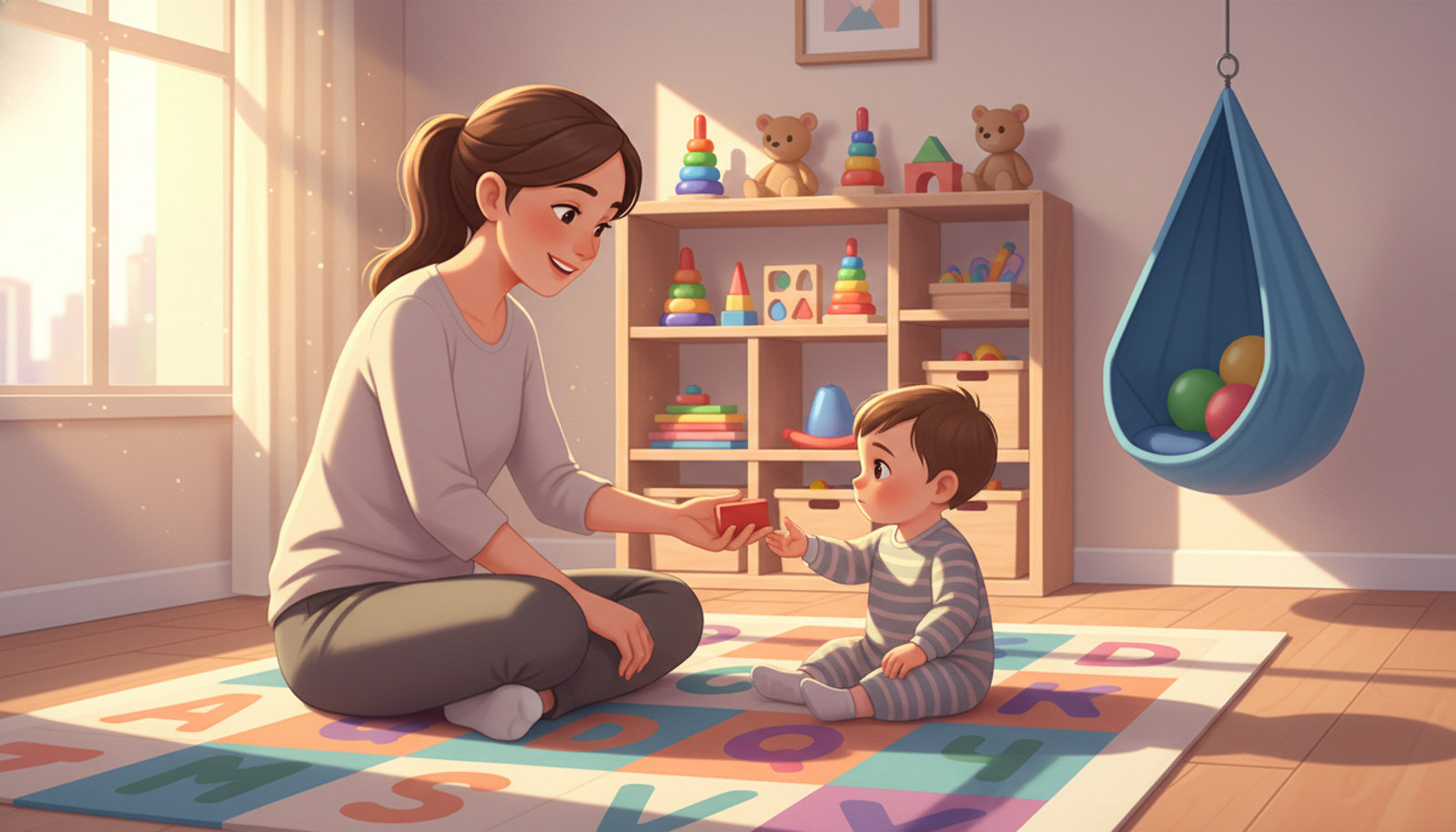
Therapy happens in the clinic, but a lot of the everyday progress happens at home. There are simple things you can do to encourage your child to communicate without making it feel like work.
Narrate your daily routines
You do not need expensive educational toys to teach language. Talk to your child while you are doing regular chores. If you are making chapati dough in the kitchen, tell them what you are doing. “Look, I am adding water. Mix, mix, mix. Now the dough is soft.” This constant exposure to words in context helps them naturally build their vocabulary.
Give them a reason to talk
We often anticipate what our children need before they even ask. If your child points to their sippy cup, wait a few seconds before handing it over. Say the word “water” clearly and see if they try to imitate the sound. Even an attempt like “wa” should be praised and rewarded immediately.
Read and sing in your mother tongue
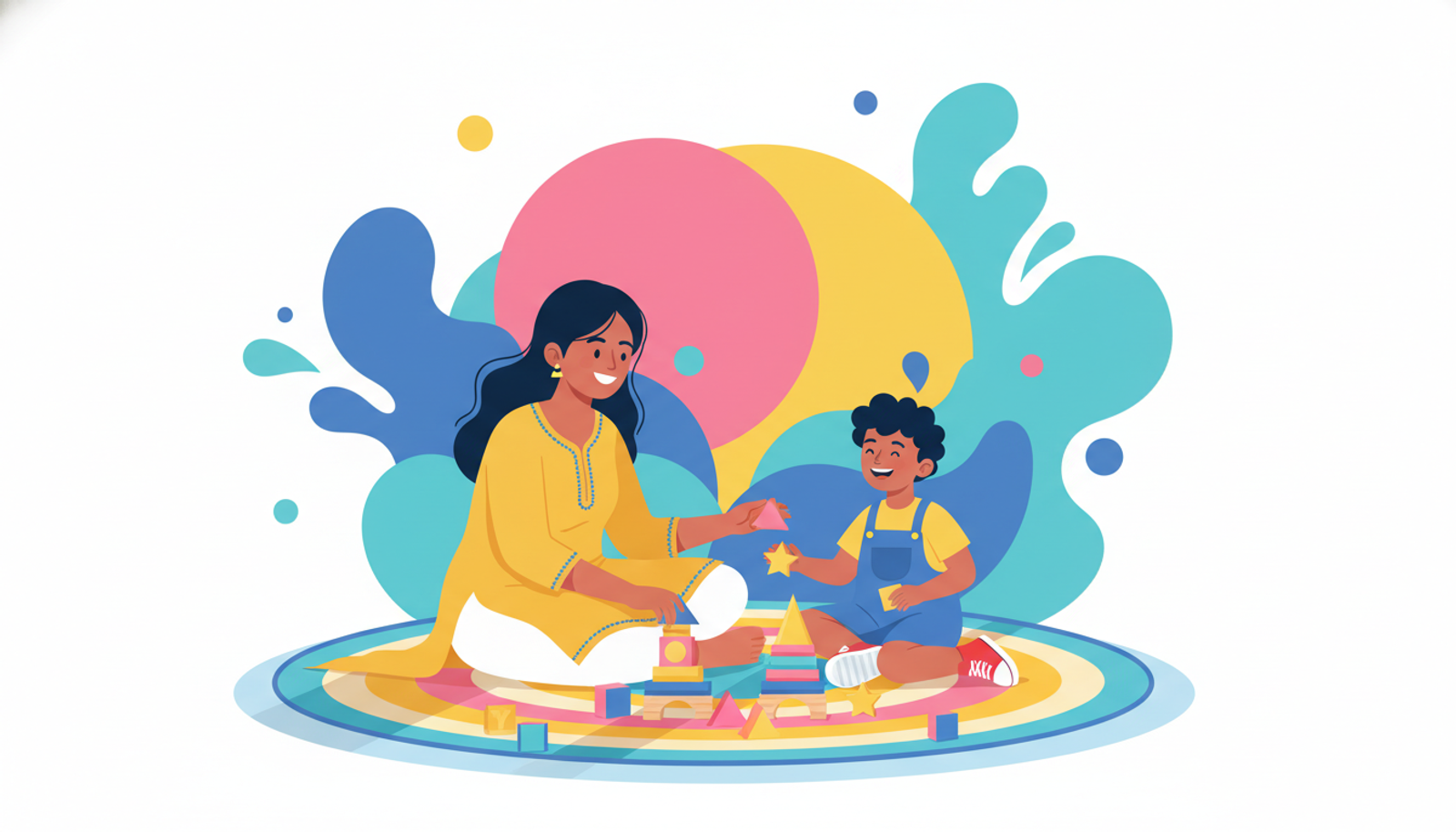
Do not worry about forcing English if it is not your primary language at home. Speak, sing, and read in Telugu, Hindi, or whichever language you are most comfortable using. Children learn best when the language feels natural, warm, and emotional. Sing simple local rhymes or make funny animal sounds while playing with their toys.
Limit passive screen time
Screens are a part of modern life, but passive watching does not teach communication. A child learns to talk by watching your mouth move and by interacting directly with you. Try to replace phone time with face-to-face play. Rolling a ball back and forth or playing a simple game of peek-a-boo does wonders for social interaction.
When to look for professional help in Hyderabad
If you notice the signs we discussed, you might be wondering what the next step is. Parents often wait because they hope the issue will resolve on its own. It is a completely natural reaction, but early support makes a massive difference.
Early intervention programs are designed to help children during their most active years of brain development. The younger a child is when they start receiving help, the better the outcomes usually are.
You should consider consulting a specialist if your gut feeling tells you something is off with your child’s communication. You should also seek help if your child is visibly frustrated because they cannot tell you what they want, or if they have trouble following simple instructions at home.
At Therapy Genius, our approach is built around understanding your child as an individual. We focus on overall communication skill development, not just making a child repeat words. Our multidisciplinary team looks at how your child plays, how they interact, and what motivates them. Pushp Bhandari and our entire team believe heavily in functional skill development. We want your child to be able to communicate their needs clearly, whether they are at home, playing at the local park, or starting preschool.
We also know that you are the most important person in your child’s life. We work directly with you, providing specific guidance so you know exactly how to handle frustrations and encourage speech at home.
Frequently Asked Questions
Does growing up in a bilingual home cause speech delays?
This is a huge myth. Hearing multiple languages at home, which is very common in Indian households, does not cause a speech delay. Bilingual children might mix up words from different languages sometimes, but they still meet their communication milestones just like any other child.
Can sensory issues affect my child’s speech?
Yes. Sometimes children with sensory processing difficulties find it hard to focus on communication because they are overwhelmed by their environment. Occupational therapy and speech therapy often go hand-in-hand to help a child regulate their body so they can focus on learning to communicate.
What happens during a speech therapy session?
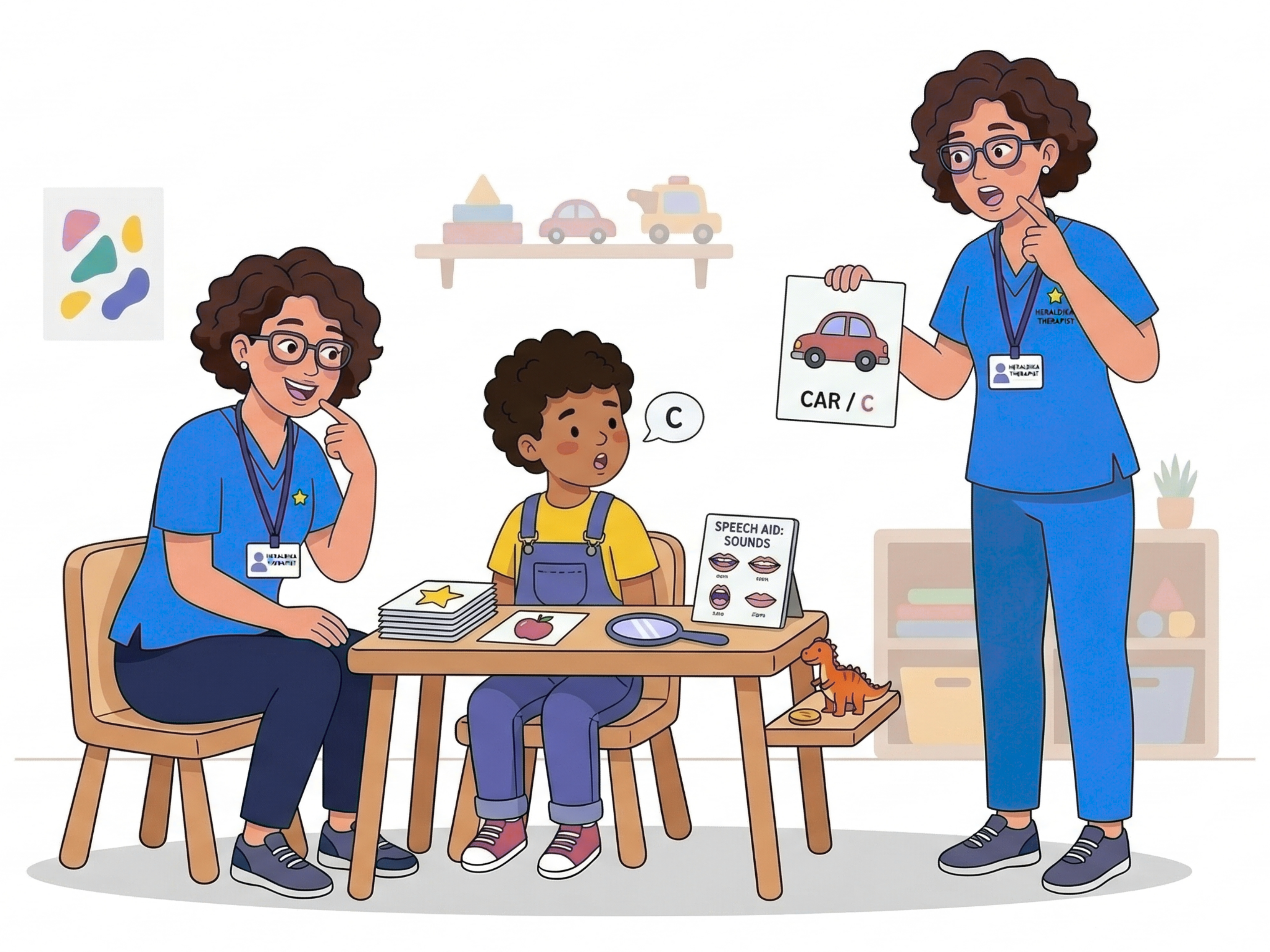
It looks a lot like play. We use games, toys, and activities that your child naturally enjoys to encourage them to make sounds, use words, and follow directions in a pressure-free environment.
Taking the next step
Realizing your child might need extra help is tough, but it is also the first active step toward giving them the tools they need to thrive. Early support can change the trajectory of a child’s development. If you are worried about your child’s milestones, reach out to us at Therapy Genius. We are here to listen, assess, and guide your family through this journey.