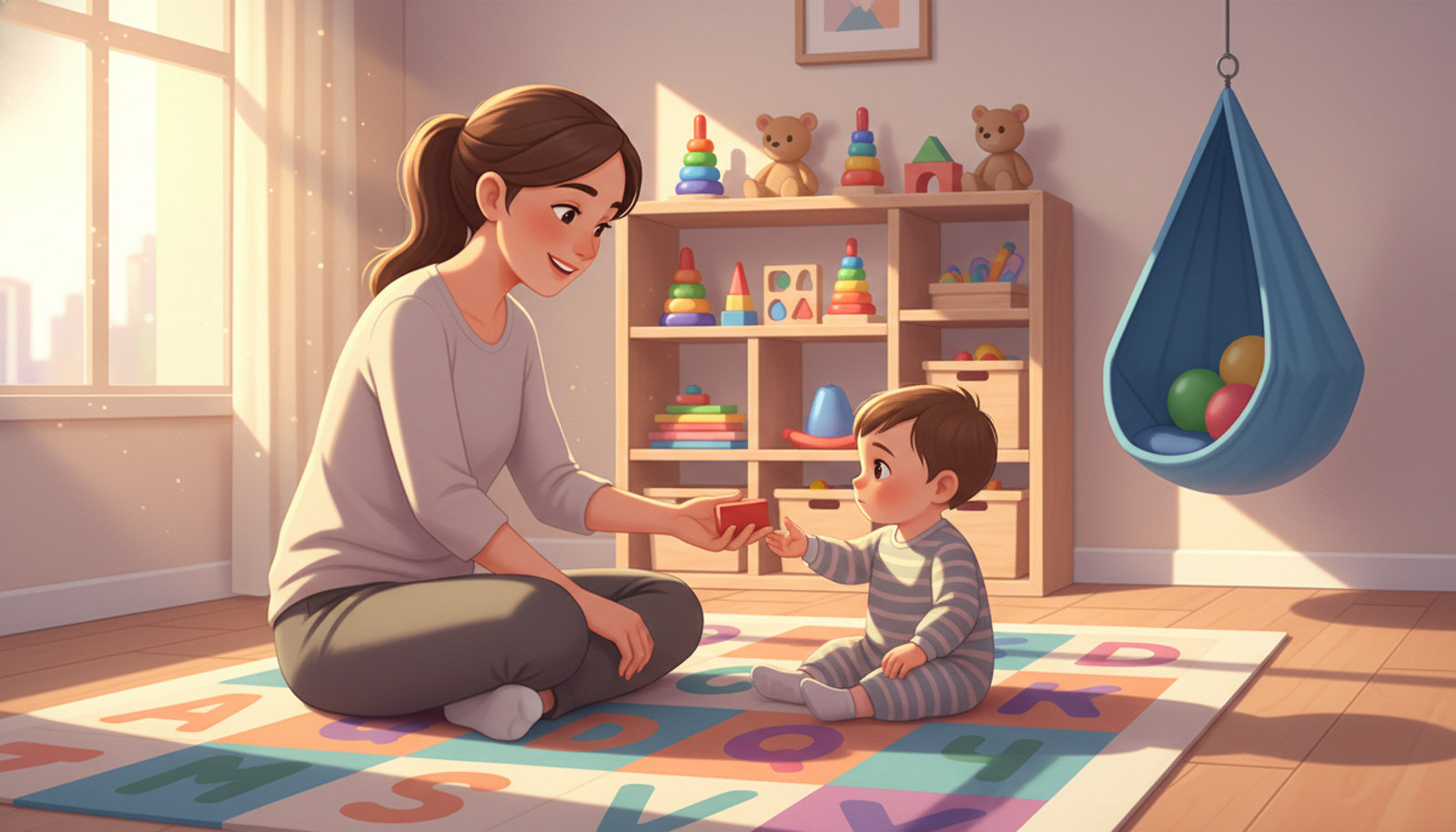
Parenting a toddler is a blur of joy, exhaustion, and constant observation. You watch them take their first steps, try new foods, and babble their way through the day. Sometimes, though, you notice something that makes you pause. Maybe your neighbor's child is pointing at airplanes in the sky, while yours prefers to sit quietly and spin the wheels of a toy car for long stretches.
It is completely normal to feel a sudden wave of anxiety when you notice these differences. At Therapy Genius, we sit across from parents every week who carry this exact worry. They arrive with pages of internet research, late-night worries, and a deep desire to do the right thing for their child. I always tell them the same thing: noticing these details is the first step of being a great parent.
The 18-month mark is a highly sensitive window in your child's development. By this age, toddlers start interacting with the world in much more predictable and social ways. When those interactions look different, it might be an early sign of autism spectrum disorder. Identifying these signs early is the kindest, most effective step you can take to support your child's growth. This checklist is designed to help you understand what to look for, without the medical jargon.
Why 18 Months is a Critical Window
Around 18 months, children usually experience a massive explosion in social and communication skills. They begin to understand that they can influence the people around them. They point to things they want, bring you toys to show off, and look at your face to see how you react to a loud noise.
Autism spectrum disorder affects how a person communicates and relates to others. Because the core features of autism are rooted in social interaction and communication, these signs become much more visible when neurotypical children are rapidly developing these specific skills.
Waiting to see if a child "grows out of it" is a common response. Many well-meaning friends and family members might tell you that "boys talk late" or that your child is simply shy. While late blooming is absolutely a real phenomenon, relying on hope can sometimes delay access to much-needed early intervention programs. We know that the brain of a toddler is incredibly adaptable. Early support can make a meaningful difference in a child's development.
Social Communication and Interaction Markers
One of the most telling areas to observe is how your child interacts with you and others. Children with autism often interact with the world differently.
Eye Contact and Connection
Most toddlers naturally seek out eye contact. They look at you when you call their name, or when they want something from you. An early sign of autism is inconsistent or absent eye contact. Your child might look past you, or seem to look "through" you. Sometimes, parents describe feeling like their child is in their own world.
Responding to Their Name
By 18 months, a child typically stops what they are doing and looks at you when you call their name. A child on the autism spectrum might ignore their name entirely. Many parents initially suspect their child has a hearing problem and visit an audiologist before considering a developmental evaluation. If your child responds to the sound of their favorite cartoon but not their name, it is a sign worth discussing with a professional.
Pointing and Showing
We call this "joint attention." It happens when a child points to a dog across the street, looks back at you to make sure you see it, and then looks back at the dog. It is their way of sharing an experience with you. A child showing early signs of autism might not point to show you things. If they want something out of reach, they might take your hand and lead you to it, using your hand almost like a tool, rather than making eye contact and pointing.
Facial Expressions and Empathy
Toddlers are highly expressive. They smile back when you smile at them. If a child on the spectrum is happy, their expression might not match the intensity of the situation, or they might display a flat affect. They might also not respond to your emotions. If you pretend to cry, a typical 18-month-old will usually show concern or stare intently. A child with autism might not register the emotional change.
Behavioral Patterns and Play
How your child plays is a window into their developing brain. The way toddlers with autism interact with toys and their environment often stands out from their peers.
Repetitive Movements
You might notice your child flapping their hands, spinning in circles, rocking back and forth, or walking on their toes. While many children do these things occasionally when excited, a child with autism might engage in these behaviors frequently, or use them as a way to calm down when overwhelmed.
Unusual Play Patterns
At 18 months, children usually start engaging in simple pretend play. They might feed a doll with an empty spoon or push a toy car while making "vroom" noises. A child with autism might be more interested in the parts of the toy. They might spend long periods spinning the wheels of the car, lining up blocks in a perfectly straight row, or sorting toys by color rather than playing with them. If their play is disrupted, they might become intensely distressed.
Sensory Processing Differences
Many children with autism experience the world with a heightened or lowered sense of input. Your child might cover their ears at everyday noises like a vacuum cleaner or a blender. They might refuse certain textures of clothing or food. Conversely, they might seek out intense sensory input by staring at lights, sniffing objects, or intentionally bumping into furniture.
Speech and Language Red Flags
Speech delay is often the very first thing parents notice. It is the most common reason families first walk through the doors at Therapy Genius.
At 18 months, most toddlers use at least a handful of single words regularly and attempt to copy words you say. An early sign of autism is a complete lack of spoken words by this age.
Another significant marker is the loss of previously acquired skills. If your child used to say "mama" or "dada" or used to wave goodbye, but has suddenly stopped doing so, this requires an immediate developmental evaluation. Regression is a strong indicator that professional therapy guidance is needed.
The Role of Early Intervention
If you recognize several items on this checklist, your mind might instantly jump to the future. It is natural to worry about school, independence, and social life. Take a deep breath. An autism diagnosis is not a full stop; it is simply a new set of directions.
Early intervention programs are designed specifically for this age group. Behavior therapy for children and speech therapy for speech and language delay can drastically alter a child's developmental trajectory. At Therapy Genius, we use evidence-based behavior therapy techniques and functional skill development tailored to your child. We do not try to "cure" autism or change who your child is. We equip them with the tools they need to communicate, regulate their emotions, and interact with the world comfortably.
Parents are an important part of the therapy journey. We spend a lot of time on parent counseling and guidance. We want you to leave our center knowing exactly how to play, communicate, and support your child at home.
Trusting Your Parental Instincts
You know your child better than anyone else on the planet. If your gut tells you something is different about their development, listen to it. Do not let anyone dismiss your concerns. Reaching out for a developmental screening is a proactive, loving choice.
Every child can learn and progress with the right support. If you are noticing these early signs, taking action now opens the door to therapies that will help your child thrive.
Frequently Asked Questions
Q: What if my child does some of these things but not all?
It is completely normal for a child to exhibit one or two of these behaviors. Autism is a spectrum, meaning it presents differently in every child. However, if you notice a cluster of these signs, especially regarding communication and eye contact, it is best to consult a professional.
Q: Will an 18-month evaluation give me a definite diagnosis?
While some children can receive a reliable diagnosis at 18 months, others might receive a "provisional" diagnosis or simply be identified as having developmental delays. Regardless of the label, identifying the delay means you can start early intervention programs immediately, which is the most important step.
Q: How does speech therapy help an 18-month-old who isn't talking?
Speech therapy for toddlers looks a lot like play. We work on building pre-linguistic skills, like joint attention, imitation, and turn-taking. We might use gestures, pictures, or sign language to give your child a way to communicate their needs, which greatly reduces frustration and tantrums.
Q: Do I need a referral from a pediatrician to start therapy at Therapy Genius?
You do not always need a formal medical referral to begin a consultation. If you are concerned about your child's development, you can reach out directly to a child development center like ours to schedule an initial assessment. Early action is always the best path forward.
About Pushp Bhandari
Founder & Head of Department (HOD)
Pushp Bhandari is the Founder and Head of Department at Therapy Genius, leading a multidisciplinary team dedicated to evidence-based therapy and early intervention for children.
Book a consultation →