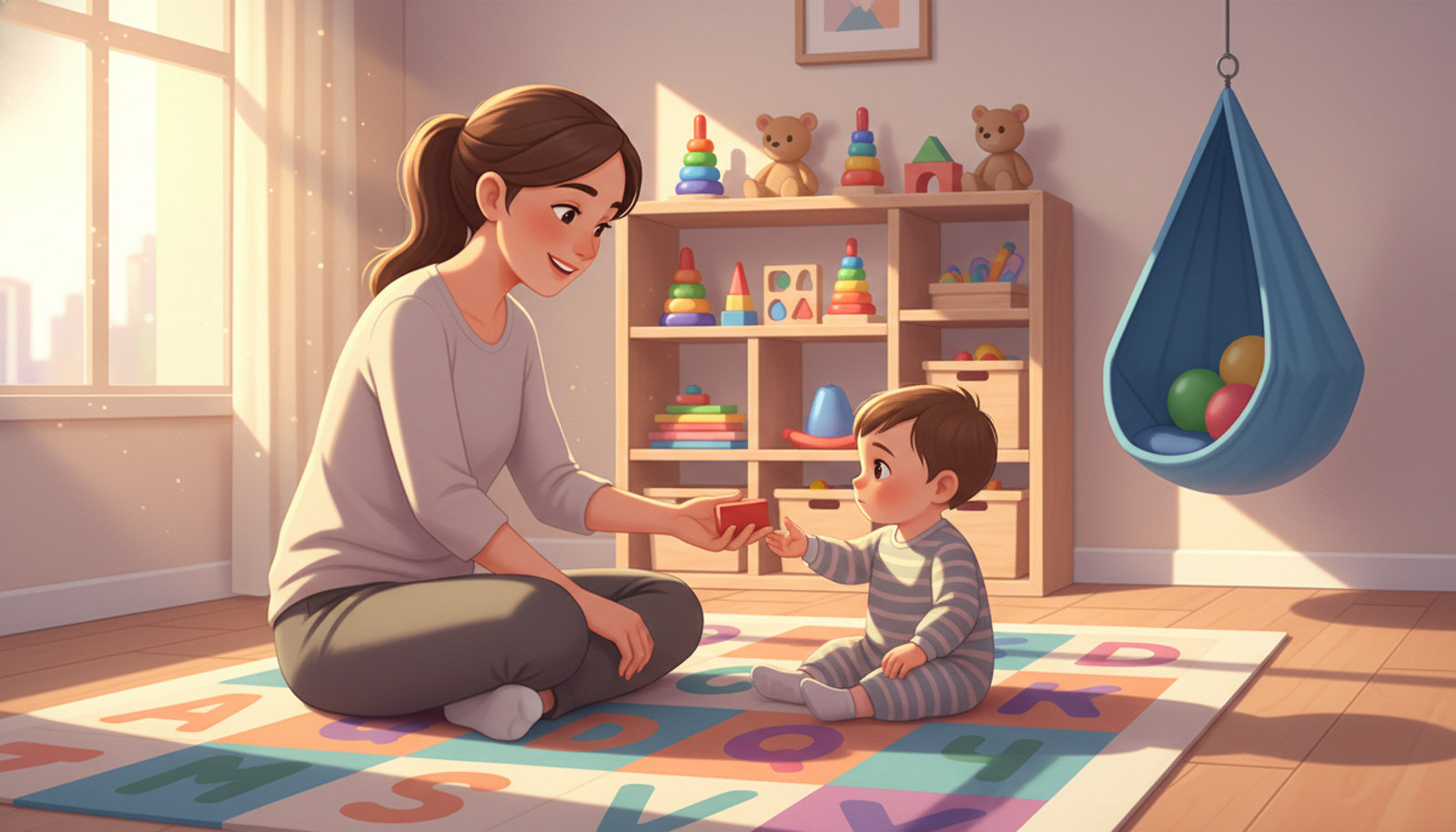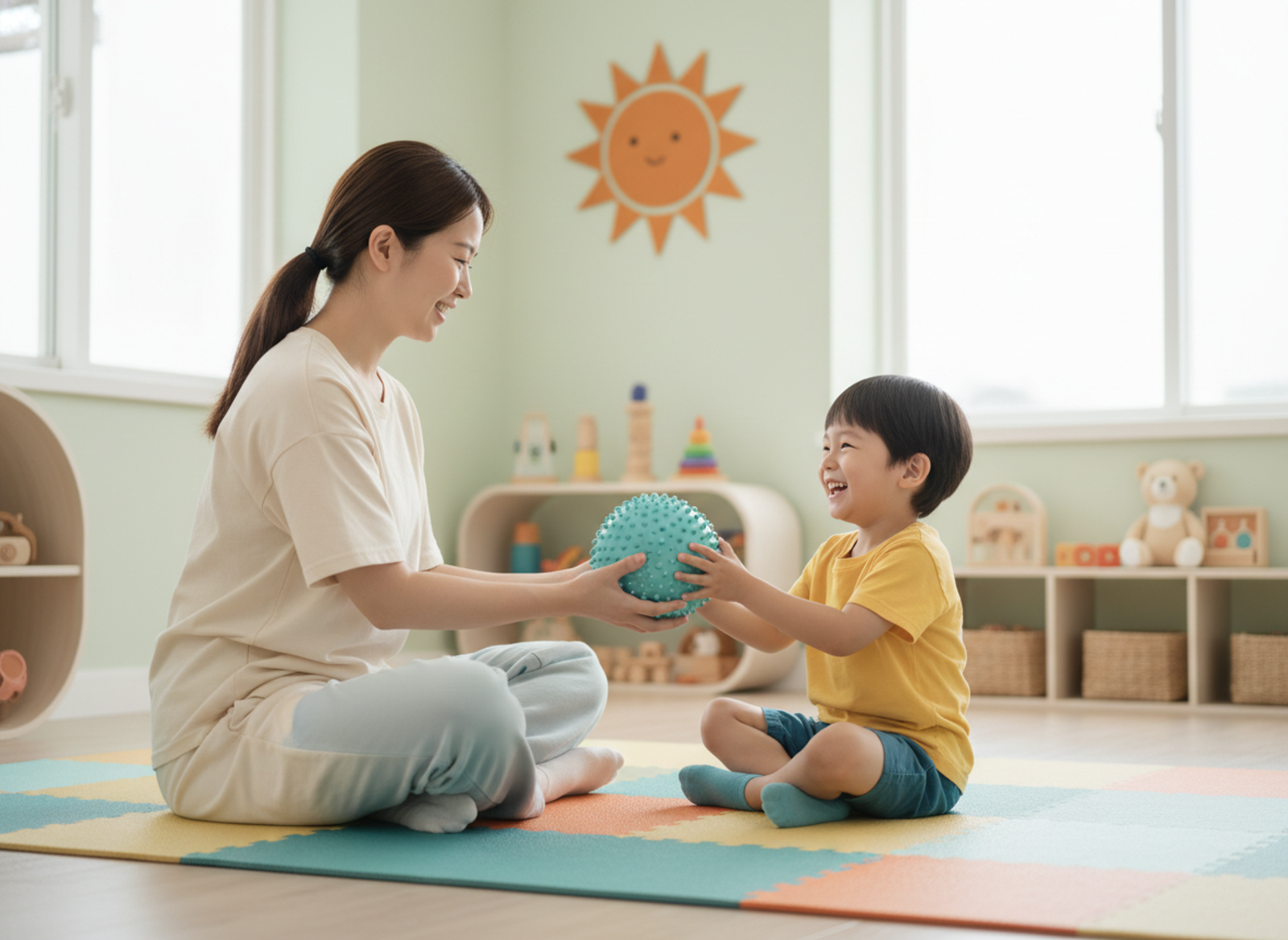
You might be sitting on the living room floor on a hot summer afternoon, surrounded by expensive, light-up toys. Yet your two-year-old seems perfectly happy spinning the wheel of a plastic car in the corner, completely ignoring you. If you are a parent of an autistic child or a child showing early signs of developmental delay, moments like this can feel very lonely. You just want to connect with them.
We hear this a lot at Therapy Genius. Parents often ask us how they can get their child to play with them, share a smile, or just look up when their name is called. The good news is that you do not need a clinic full of specialized equipment to start building those connections. You already have everything you need right in your home.
Play is the work of childhood. For autistic toddlers, we just need to change the way we approach that work. Today I want to share some very simple play routines you can use at home to improve social skills in children with autism. These are not rigid lessons. They are messy, loud, and joyful interactions designed to build joint attention and communication.
Rethinking social skills for toddlers
When we hear the phrase social skills, we usually think of sharing toys on a playground or having a conversation at a birthday party. But for a two, three, or four-year-old, social skills are much simpler.
Long before a child can ask another child to play hide and seek, they need to master the basics. This means noticing that someone else is in the room. It means looking at the same object you are looking at, which we call joint attention. It involves taking turns in a game or smiling back when you smile at them.
Autistic children often experience the world differently. Their sensory systems might be overwhelmed by too much noise or light, making it hard to focus on a parent's face. Our goal is to enter their world first, rather than forcing them into ours. We want to make social interaction predictable and highly rewarding.
The ready, set, go blanket swing
This is a favorite among our families. All you need is a sturdy bedsheet and another adult. We usually suggest doing this on a soft surface like a bed.
Have your child sit or lie down in the middle of the bedsheet. You hold two corners, and your partner holds the other two. Gently lift the child an inch or two off the bed. Now, sing or say a simple, repetitive phrase like "Ready... set..." and then pause.
Do not say "go" immediately. Wait. Look at your child's face. You are looking for any sign of communication. They might look at your eyes, make a sound, or wiggle their body. The moment they do, shout "GO!" and gently swing them side to side for a few seconds.
The pause is where the learning happens. By pausing, you are creating a space for your child to realize that they have to interact with you to keep the fun game going. This builds anticipation and encourages eye contact in a very natural way.
Sorting the laundry together
Sometimes the best social skills activities for autistic toddlers are just everyday household chores. In Indian homes, folding clothes is a daily ritual. You can turn this into a powerful shared activity.
Sit on the floor with a basket of dry clothes. Pick out all the socks. Hold up a red sock next to your face. By holding it near your eyes, you naturally encourage your child to look at your face. Say "Red sock!" and drop it in a pile. Hand another sock to your child.
If they do not know what to do, gently guide their hand to place the sock in the pile. Give a high-five or a big smile when they do. This activity teaches parallel play and shared attention. You are both focused on the same task, sitting close together, and taking turns.
The kitchen band
Many autistic children seek out specific sounds or sensory experiences. We can use this to our advantage. Go to your kitchen and grab a few steel plates, katoris (small bowls), and a couple of wooden spoons.
Sit facing your child. Start tapping a bowl with your spoon to a simple, steady beat. Hand a spoon to your child. If they start tapping too, great. If they tap fast, you tap fast. If they tap slow, you tap slow.
This is called imitation. Imitation is a fundamental building block for social skills and language. By copying what your child does, you are validating their actions and showing them that their play is interesting. Once they notice you are copying them, they might start changing their rhythm just to see what you do next. Suddenly, you are having a conversation without using any words.
The towel peek-a-boo
Traditional peek-a-boo can sometimes be too fast or overwhelming for children with sensory processing differences. We can modify it to make it more comfortable.
Take a small hand towel. Sit facing your child. Instead of covering your face, cover a favorite toy or a small snack on the floor between you. Say "Where did it go?" in an exaggerated, playful voice. Wait a few seconds to see if your child reaches for the towel.
If they pull the towel away, act extremely surprised. "There it is!"
If they don't reach for it, pull it away yourself and act just as excited. Repeat this several times. The repetition is comforting. Children learn to anticipate the surprise, which often leads to shared smiles and joint attention. You are teaching them that interacting with you is fun and predictable.
Sofa cushion obstacle course
Physical play is a wonderful way to work on social interaction. Gather the cushions from your sofa and arrange them on the floor to make a slightly uneven walking path.
Stand at one end and encourage your child to walk across the "bridge." Your child will likely lose their balance and need a hand to steady themselves. Offer your hand, but wait for them to reach out and take it.
This creates a natural opportunity for your child to request help. Requesting help is a major social and communication milestone. When they reach for your hand, they are communicating that they need you. As they cross the cushions, offer lots of praise. You can even make silly sound effects as they step on each cushion.
Finding your rhythm and getting support
Trying these activities might feel a bit awkward at first. Your child might walk away after ten seconds, and that is completely fine. Do not force them to sit and play if they are distressed. Try again later. Consistency matters far more than the length of the play session. Five minutes of engaged, happy play is better than thirty minutes of frustration.
We know that parent guidance strategies are just one piece of the puzzle. While playing at home is incredibly beneficial, professional support can give your child the tools they need to thrive. Early intervention programs are designed specifically to help children develop communication, emotional regulation, and social interaction skills.
If you find that your child is consistently struggling to connect, an evaluation at a child development center can provide clarity. Behaviour therapy for children can help manage frustration and build attention, while speech therapy can unlock new ways for your child to communicate their needs and feelings. At Therapy Genius, we always work alongside parents, because you are your child's first and most important teacher.
Take it one day at a time. Celebrate the small victories, whether it is a fleeting glance, a shared laugh over a dropped sock, or a loud, messy kitchen concert.
Frequently Asked Questions
Q: What age should I start these play activities with my child?
You can start right away. These activities are tailored for children ages 2 to 5, but the principles of joint attention and turn-taking apply to younger toddlers as well. The earlier you introduce interactive play, the better it is for their development.
Q: My child ignores me when I try to play. What should I do?
Start by joining their play instead of making them join yours. If they are spinning a wheel on a toy car, sit down and spin a wheel on another car next to them. Wait for them to notice you. Do not demand eye contact immediately; let it happen naturally as you share the same interest.
Q: How often should we do these activities at home?
Aim for short, frequent sessions. Three or four 5-minute play sessions spread throughout the day are often more effective than one long 30-minute session. Pay attention to your child's mood and stop if they show signs of sensory overload or fatigue.
Q: Does my child still need professional therapy if we play like this at home?
Home activities are an excellent foundation, but they usually work best alongside professional guidance. Autism therapy India offers structured early intervention, occupational therapy, and speech therapy that addresses underlying developmental challenges. Therapists can also give you personalized strategies for your child's specific needs.
About Pushp Bhandari
Founder & Head of Department (HOD)
Pushp Bhandari leads Therapy Genius, a multidisciplinary child development center focusing on evidence-based early intervention, behaviour therapy, and speech therapy.
Book a consultation →