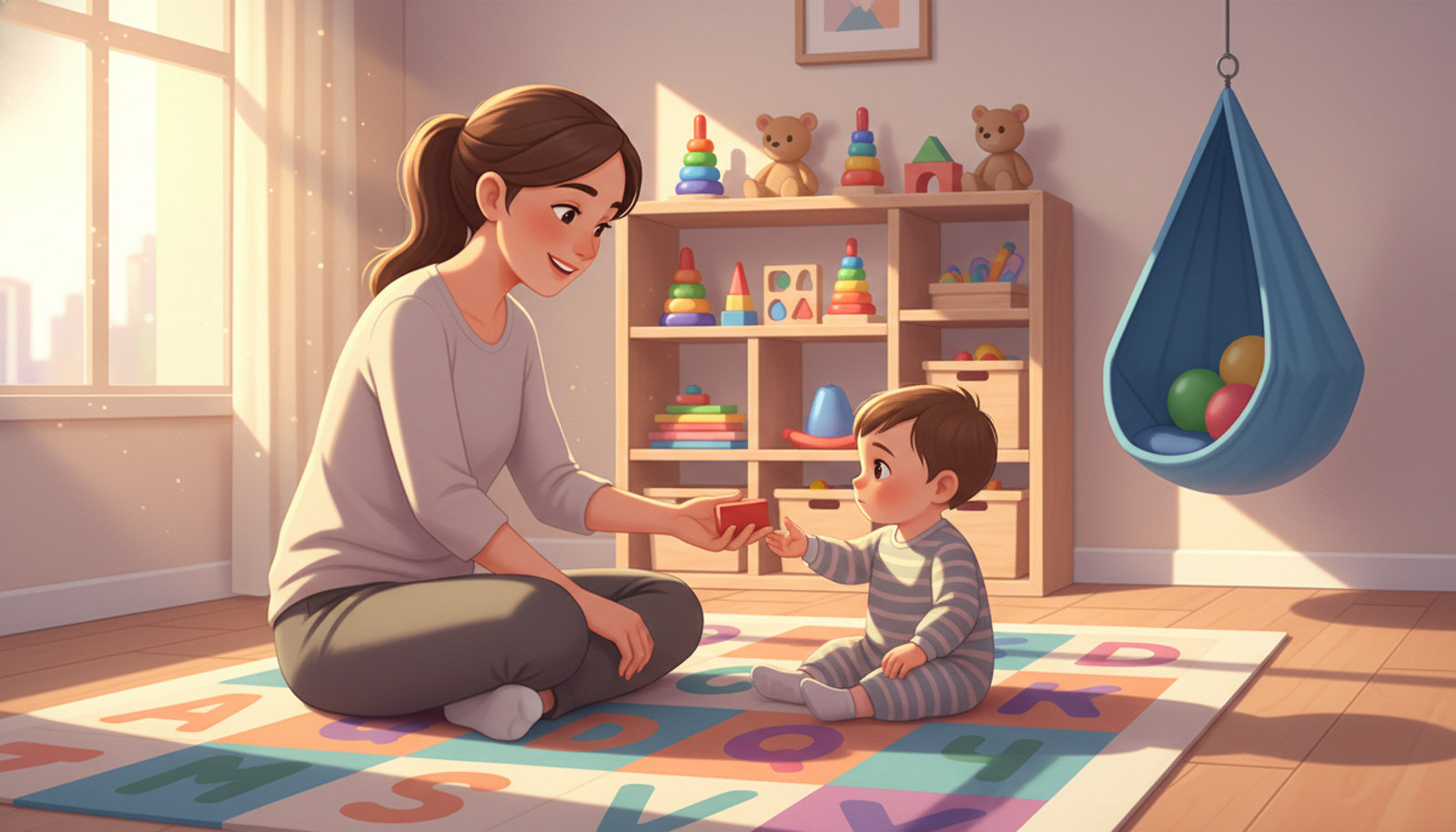
Toddler play usually looks like complete chaos. You walk into a room, and the floor is covered in building blocks, stray socks, and toys that make entirely too much noise. We spend a lot of time watching our kids in these moments. It often feels like we are just supervising to keep them safe and prevent disasters. But play is much more than a way to pass the time before naps. It is how young children communicate. It shows us exactly how their brains are processing the world around them.
I often tell parents that play is a toddler's full-time job. When they stack rings or throw a ball, they are testing out physics, social rules, and communication. Because play is so central to a child’s early years, it is also one of the first places we can notice if development is taking a different path. Sometimes, the way a child interacts with their toys can point to early signs of autism.
Understanding these signs is not about finding something wrong with your child. It is about understanding who they are and how they experience their environment. When we know what to look for, we can step in early. Early intervention gives children the tools they need to navigate a world that is not always built for them.
The Shift from Typical to Atypical Play
Every child develops at their own speed. Some walk at ten months, others at fifteen. Some talk early, and others take their time. Play also has stages. Babies start by just exploring objects—mouthing them, banging them together, or dropping them to see what happens. This is totally expected and healthy.
As they grow, we expect to see a shift. A one-year-old might start pushing a toy car back and forth. A two-year-old might start feeding a teddy bear or pretending to talk on a toy phone. This progression shows that the brain is moving from concrete, physical exploration to imaginative, symbolic thinking.
When a child is on the autism spectrum, this progression often looks different. They might get stuck in the exploratory phase, or they might develop highly specific, rigid ways of interacting with their toys. As a parent, you might feel a lingering sense that your child's playtime does not quite look like the playtime of other kids in your neighborhood park or apartment society.
Behaviors to Watch For
Let's look at some specific play behaviors that might warrant a closer look.
Lining Things Up in Strict Order
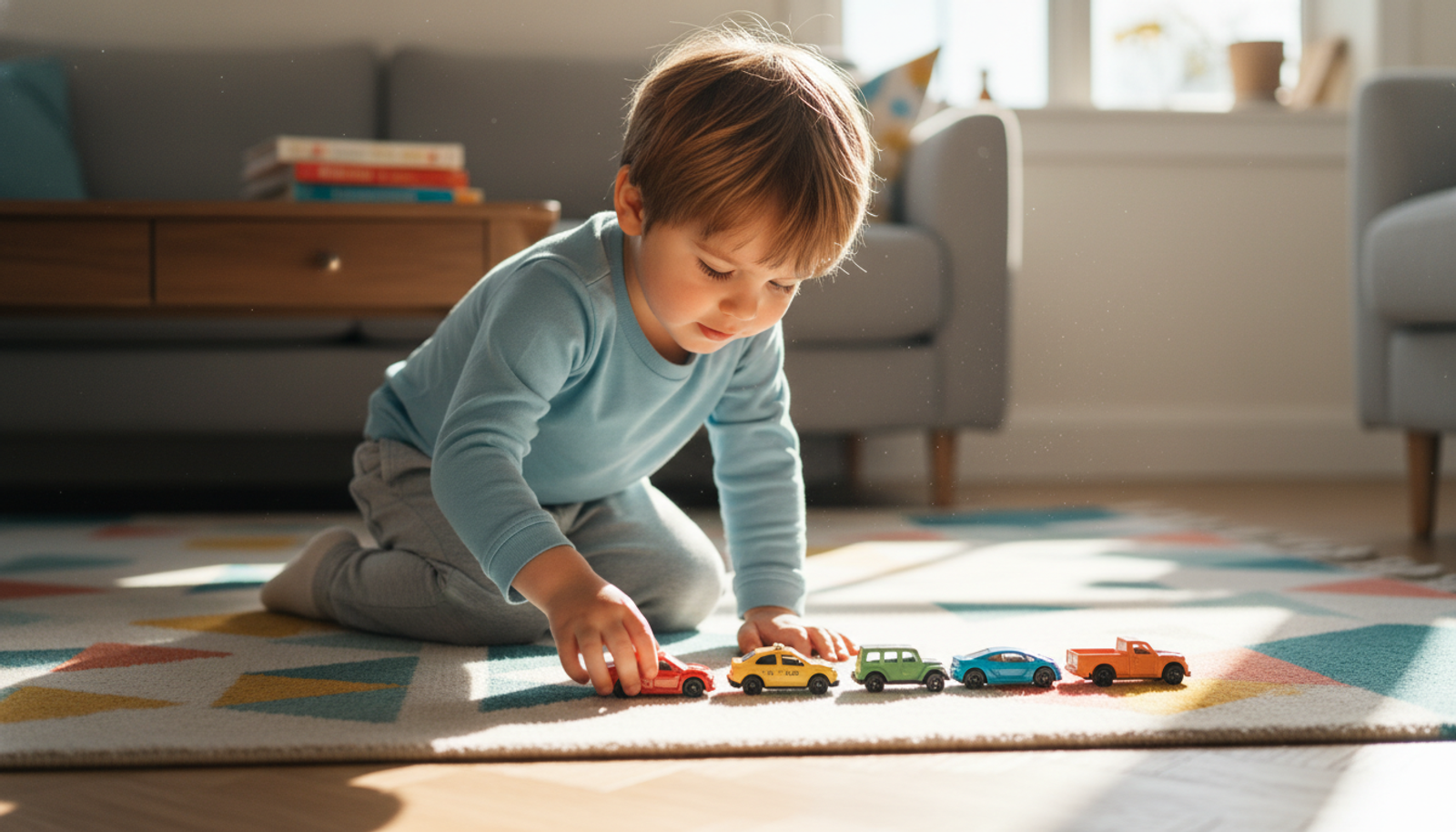
Most toddlers love to make a mess. They dump bins of toys onto the floor with joy. A child with autism might do the exact opposite. You might notice them carefully lining up their toy cars, wooden blocks, or even household items like shoes and stainless steel spoons. If you move one of these items out of place, they might become deeply upset. The focus is entirely on the order and arrangement, rather than creating a story or a game with the objects.
Focusing on Parts Instead of the Whole
Imagine handing a toddler a toy auto-rickshaw. A typical response is to push it along the floor, maybe making a "vroom" sound. A child showing early signs of autism might flip the toy over and spend twenty minutes just spinning the wheels, bringing their face very close to watch the movement. They are fascinated by the sensory experience of the spinning part, rather than the function of the toy itself.
The Absence of Pretend Play
Pretend play is a massive milestone. It requires a child to imagine that an object is something else entirely. A wooden block becomes a telephone. An empty bowl becomes a pot of hot soup. Children with autism often struggle with this abstract thinking. They tend to use objects very literally. A block is just a block. It is meant to be stacked or dropped, but it does not become a phone. If your child is approaching two or three years old and rarely engages in make-believe, it is worth paying attention to.
Challenges with Shared Attention
Think about how often a typical toddler demands your attention. They point at an airplane in the sky, bring you a leaf they found, or hold up a drawing. They want you to look at what they are looking at. We call this joint attention. In children with autism, this desire to share experiences is often muted. They might play happily in the corner of the room for long stretches, rarely looking up to check if you are watching. If you point to something across the room, they might look at your finger instead of the object, or they might not look at all.
Repetitive Movements During Play
Sometimes, the play involves repetitive body movements. You might see hand flapping when they get excited about a toy. They might rock back and forth while sitting on the floor, or repeatedly tense their hands and arms. While many toddlers do quirky things when they are excited, persistent repetitive movements can be a clear indicator of autism.
Bringing Therapy Home
If you notice these behaviors, you do not have to wait for a formal evaluation to start helping your child. There are practical things you can do right now in your own living room.
The most effective strategy is to enter their world. If your child is lying on the floor lining up steel katoris from the kitchen, get down on the floor with them. Do not immediately try to stop what they are doing. Instead, grab a katori yourself and join the line. Once you are in their game, you can slowly introduce small changes. Maybe you gently tap your bowl with a spoon to see if they will imitate the sound.
You can also focus on activities that naturally require two people. Blowing bubbles is a great example. You blow the bubbles, wait for them to pop, and then pause. Keep the bubble wand near your mouth and wait for your child to make eye contact or reach out before you blow more. You are creating a situation where they have a reason to interact with you.
Keep the environment simple. During hot summer afternoons when you are stuck indoors, it is tempting to dump every toy out to keep them busy. Too many toys can actually cause sensory overload. Try offering just a few items at a time. This makes it easier for them to focus and interact.
Why the Right Environment Matters
Parenting a child who plays differently can sometimes feel isolating. You might take your child to a birthday party and notice they prefer to stand by the door opening and closing it, rather than joining the group. It is completely normal to feel worried or overwhelmed in these moments.
This is where finding the right support system becomes helpful. A child development center isn't just a place for structured therapy; it is a place where your child's unique way of learning is understood and respected. We use evidence-based behavior therapy techniques to help children build social communication skills naturally.
We also heavily rely on occupational therapy for kids. If a child is spinning wheels because they are craving visual stimulation, an occupational therapist can introduce activities that meet that sensory need in a more functional way. Speech therapy for children isn't just about pronunciation; it often starts with building the very basics of communication, like making eye contact or pointing to a desired toy.
Stepping Forward with Confidence
You know your child better than anyone else. If you feel that their development is not quite on track, trust your gut. Discuss your observations with a pediatrician or reach out to a professional who works in early intervention.
Remember that receiving an autism diagnosis or starting autism therapy does not change who your child is. They are still the same kid who loves the feel of the carpet, the sound of the fan, or the pattern of their blocks. Therapy simply gives them, and you, a bridge to better communication.
Early support can make a meaningful difference. The strategies you learn today will help your child navigate their social world tomorrow. You do not have to figure it all out alone. We are here to help you understand your child’s needs and give you the tools to support them at home.
Frequently Asked Questions
Q: At what age can early signs of autism be noticed?
Many parents start noticing subtle differences in play and communication between 12 and 18 months. Sometimes signs become more obvious around age two when expectations for pretend play and spoken language increase.
Q: Does lining up toys always mean my child has autism?
Not necessarily. Many neurotypical toddlers go through phases of organizing their toys. However, if lining things up is the only way they play, or if they become extremely distressed when the order is changed, it is worth discussing with a professional.
Q: How can behavior therapy for children help with play skills?
Therapists use structured, play-based activities to teach children how to imitate, take turns, and engage in pretend play. The goal is to expand their interests while respecting their comfort levels.
Q: What should I do if my toddler ignores other children at the park?
Parallel play, where children play next to each other but not together, is normal for kids under three. If your older toddler consistently ignores peers or seems completely unaware of them, try facilitating very simple, brief interactions, like rolling a ball back and forth.

About Pushp Bhandari
Founder & Head of Department
Pushp Bhandari is the Founder and Head of Department at Therapy Genius, specializing in evidence-based therapy services for children with developmental challenges.
Book a consultation →